
Critical Spring Safety: Why Your Propane Fireplace Insert Needs a System Audit
Critical Spring Safety: Why Your Propane Fireplace Insert Needs a System Audit
For homeowners in Central New York, a propane fireplace insert is more than just a cozy amenity; it is a high-performance heating solution often retrofitted into the historic masonry of 1920s and 30s era homes.
Because these systems are remarkably reliable, they often suffer from “out of sight, out of mind” syndrome. However, the transition from heavy winter use to spring dormancy is the most technically significant time to evaluate the integrity of your fuel delivery system. At Country Propane, we have focused on the safety and infrastructure of our customers’ homes since 1985. Here is why a professional spring safety check is essential for your property’s long-term security.
Our team takes pride in providing comprehensive residential propane services that go beyond simple fuel delivery. We understand the specific demands that the Central New York climate places on your home’s infrastructure, and we use that experience to keep your system running at peak performance.
1. The Mechanics of “Frost Heave” and Gas Plumbing
In the Syracuse region, our dramatic freeze-thaw cycles create significant ground movement. For a propane insert, the gas line typically travels from an exterior tank, through the foundation, and into a rigid firebox.
- The Technical Risk: As the ground settles in the spring, exterior high-pressure lines and regulators can experience subtle mechanical stress. Even minor shifting can compromise flare fittings or transition joints where the copper or CSST (Corrugated Stainless Steel Tubing) enters the masonry.
- The Solution: A professional leak-down test. Using calibrated pressure gauges, a technician ensures the entire line (from the tank’s multi-valve to the fireplace’s internal gas valve) is 100% airtight. This detects microscopic leaks that are often too small for the human nose to identify but large enough to pose a long-term hazard.
Adhering to these safety standards is not just a best practice; it is a core component of the National Fuel Gas Code (NFPA 54). By following these national requirements, we ensure that every connection and regulator in your system is evaluated against rigorous benchmarks for residential gas safety.
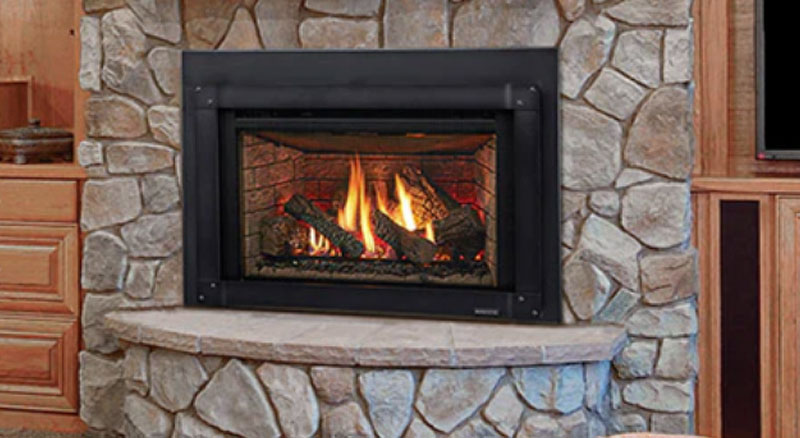
2. The Chimney Liner: A Dedicated Exhaust Path
Modern propane fueled fireplace inserts do not vent into an open chimney. Instead, they utilize a specialized stainless steel or aluminum liner “sleeve” installed within the original flue.
- Corrosion Concerns: Propane combustion produces water vapor. In older, uninsulated chimneys, this vapor can condense into acidic moisture if the liner experiences “cold spots.” Over several seasons, this can lead to interior pitting or pinhole leaks in the vent pipe.
- Blockage Hazards: Because these liners are narrow (typically 3 to 4 inches), they are highly susceptible to obstructions from nesting wildlife or debris during the spring. A compromised liner can lead to carbon monoxide “spillage” into the living space. An inspection confirms that the termination cap is structurally sound and the exhaust path is clear.
- A compromised liner can lead to carbon monoxide “spillage” into the living space. Proper chimney liner safety and maintenance is the only way to ensure the exhaust path is clear.
- Structural Integrity: Beyond the liner itself, a professional chimney inspection is one of the most overlooked but most critical things a homeowner needs to do to ensure the 1930s era masonry remains structurally sound and has not deteriorated or worse, shifted. If the exterior chimney crown, which is not visible from the ground, or mortar joints have deteriorated, moisture can seep into the cavity, causing the internal liners to corrode or the masonry to actually collapse and crush the venting system entirely.
3. Valve Integrity and “Ghost Leaks”
During the winter, many homeowners utilize a standing pilot light. When the system is decommissioned for the summer, you are relying entirely on the internal seal of the fireplace’s gas valve to hold back pressure.
- The Issue: Microscopic debris or dust can prevent a gas valve from seating perfectly after months of use. This can result in a “ghost leak” (a slow accumulation of gas within the firebox or the cabinet assembly) during the months the unit is not in use.
- The Solution: Technicians use electronic combustible gas detectors (“sniffers”) to verify that all internal seals are holding 100% integrity for the off-season.
If you ever detect the distinct ‘rotten egg’ odor of propane or suspect a malfunction in your fireplace valve, you should immediately follow established propane safety protocols. Knowing how to identify and react to a leak is the most important step any homeowner can take in protecting their property.
Beyond Safety: Warranty and Insurance Compliance
While safety is the primary driver, there are two practical reasons to document your annual spring inspection:
- Manufacturer Warranties: Almost all major fireplace insert manufacturers explicitly require an annual inspection by a qualified technician to keep the equipment warranty in force.
- Insurance Peace of Mind: In older residential buildings, insurance providers increasingly look for “Proof of Maintenance.” A documented safety audit from your propane provider is your best evidence that the home’s high-pressure systems are being managed responsibly, which can be critical during a policy renewal or a claim.
| System Component | Technical Checkpoint |
|---|---|
| High-Pressure Regulator | Check for “venting” or signs of internal diaphragm fatigue. |
| Foundation Penetration | Verify the sealant where the gas line enters the home is intact. |
| Regulator Mounting | Ensure the tank foundation hasn’t shifted or tilted during the thaw. |
| Isolation Valves | Confirm the fireplace shut-off valve is fully functional and accessible. |
Frequently Asked Questions: Propane Fireplace Safety
Why do I need a pressure test for my propane fireplace?
A professional leak-down pressure test ensures the supply lines from your tank to the fireplace valve remain 100% airtight. This test is the only way to identify microscopic leaks caused by seasonal soil shifting or frost heave, which can put stress on gas connections during the spring thaw.
What is a “ghost leak” in a gas fireplace?
A ghost leak is a slow, often odorless accumulation of propane inside the firebox. It occurs when a gas valve fails to seal perfectly after a long winter season (often due to microscopic dust or debris buildup). A professional safety audit uses electronic sensors to ensure all seals are holding 100% integrity for the off-season.
Does a propane fireplace insert need a chimney liner?
Yes. Propane inserts require a dedicated stainless steel or aluminum liner “sleeve” to properly vent combustion gases and water vapor. Without a clear and intact liner, you risk carbon monoxide spillage and acidic condensation that can damage your home’s original masonry.
Secure Your System for the Off-Season
Propane Fireplace Safety Check
At Country Propane, we specialize in the high-pressure infrastructure that powers your home’s comfort. While your fireplace insert provides the ambiance, our job is to ensure the fuel delivery system (from the tank to the burner) remains airtight and code-compliant. A spring safety audit is the most effective way to protect your equipment and your property before the summer months begin.
Ensure your system is 100% secure for the season ahead.
Contact Country Propane’s Service Department to Schedule Your Safety Audit